Every gold price you see quoted starts with one number: the spot price. But what is spot price, exactly — and why is the price of a gold bar or coin always higher than the number on the screen? The short answer is that spot price is a wholesale benchmark, not a retail price, and the gap between spot and what you pay is called the premium.
The short answer: the spot price is the current wholesale market price for one troy ounce (31.1035 g) of pure gold for immediate delivery, quoted in US dollars and updated second by second while markets are open. You cannot buy physical gold at spot — a finished bar or coin always costs spot plus a premium for minting, distribution, and the dealer’s margin.
In This Guide
- What Is Spot Price? (Definition)
- How the Gold Spot Price Is Set
- Spot Price vs Premium: What You Actually Pay
- The Spread: The Other Cost Nobody Mentions
- What Moves the Spot Price Up and Down?
- How to Calculate What You Will Pay (Worked Example)
- How to Check the Live Spot Price
- How to Buy Gold at the Best Price
- Frequently Asked Questions
What Is Spot Price?
The spot price is the price at which gold trades on the global wholesale market for immediate delivery — “on the spot,” as opposed to a futures contract for delivery at a later date. It is quoted per troy ounce of pure gold (31.1035 grams), almost always in US dollars, and converted continuously into other currencies.
Three things to understand about the spot price:
- It is a wholesale price. Spot applies to large Good Delivery bars of about 400 troy ounces (~12.4 kg) traded between banks and professional dealers — not to the 1 oz bar or coin in your hand.
- It is a reference, not a retail price. Spot tells you the metal value — what the pure gold in a product is worth right now. Nobody sells you a finished coin at that number, because someone has to refine, mint, insure, transport, and sell it.
- It never sits still. Gold trades nearly 24 hours a day across time zones — Sydney to Tokyo to London to New York — so the spot price updates every few seconds during market hours, with only a brief pause each day.
How the Gold Spot Price Is Set
No single person, exchange, or government sets the price of gold. It is discovered continuously as buyers and sellers trade, across three connected markets:
1. The London over-the-counter (OTC) market. The largest gold market in the world, where bullion banks trade physical gold directly with one another. Because these trades happen privately, the OTC market publishes no official price of its own — which is why the market needs a benchmark.
2. The LBMA Gold Price. Twice each London business day — at 10:30 AM and 3:00 PM London time — an electronic auction sets the official benchmark. Accredited participants submit buy and sell orders, and the auction matches them until supply and demand balance at a single clearing price. The auction is administered by ICE Benchmark Administration (since March 20, 2015, when it replaced the old “London Gold Fix” that dated back to 1919). Central banks use it to value reserves, refiners use it to price metal, and gold funds use it to value holdings. The LBMA Silver Price works the same way, set once a day at noon London time.
3. COMEX gold futures in New York. Futures contracts — agreements to buy or sell gold at a future date — trade on COMEX. The futures price is tightly linked to spot: it generally equals spot plus the cost of carrying gold until delivery (chiefly financing and storage). If gold in New York gets too expensive against London, traders buy in London and sell in New York, and that activity pulls the two prices back together within minutes.
Together, these three markets produce one continuously updated number — the spot price you see quoted everywhere. For a deeper walk-through of the mechanics, see this guide on how the gold price is set.
Spot Price vs Premium: What You Actually Pay
Here is the formula that governs every physical gold purchase:
Total price = spot price + premium
The premium is the difference between the price you pay for a finished product and the spot value of the metal inside it. It is not a surcharge a dealer invents — it is the accumulated cost of turning wholesale gold into something you can hold:
- Refining and minting: striking or casting the bar or coin, assaying it, stamping it, and packaging it. Government mints charge more than private mints because of legal-tender status, security features, and brand recognition.
- Distribution: armored transport, secure warehousing, and inventory management from mint to distributor to dealer.
- Insurance and compliance: insuring the inventory and meeting anti-money-laundering rules.
- Dealer margin: the dealer’s operating costs and profit — thin at competitive bullion dealers, much wider at high-pressure sellers.
Premiums vary by product, and the pattern is simple: the bigger the piece, the lower the premium. It costs roughly the same to mint, assay, package, and ship a 1 oz silver coin as a 1 oz gold coin — so on cheaper metal, that fixed cost is a bigger percentage. Typical dealer premiums in calm markets:
| Product | Typical premium over spot |
|---|---|
| 1 kg gold bar | about 1–2% |
| 10 oz gold bar | about 1–2% |
| 1 oz gold bar (recognized brands) | about 1.5–3% |
| 1 oz bullion coins (Maple Leaf, Britannia, Krugerrand) | about 3–6% |
| 1 oz American Gold Eagle | about 5–8% |
| 1/4 oz gold coin | about 7–10% |
| 1/10 oz gold coin or 1 g bar | about 12–25% |
Two dealers selling the same 1 oz gold bar at different prices are not charging different amounts for gold — they are charging different premiums. That is why you should always compare the total out-the-door price, never the premium alone. For a coin-by-coin comparison of what premiums look like in practice, see our guide to the Gold Britannia vs Gold Maple Leaf — the two best 1 oz coins, and why the cheaper one on the day usually wins.
The Spread: The Other Cost Nobody Mentions
The premium is what you pay over spot when you buy. The spread is the gap between a dealer’s selling price and their buy-back price for the same product — your round-trip cost if you buy today and sell back later.
Example: a coin with a 4% premium that a dealer buys back at 1.5% below spot has a spread of about 5.5%. That spread is the real cost of owning physical gold for a short time, and it is why gold is a poor vehicle for quick flips. Before you buy, check the dealer’s buy-back policy — a dealer who publishes buy-back prices is telling you their spread up front.
What Moves the Spot Price Up and Down?
The spot price moves on the same forces that move any global market:
- The US dollar. Gold is priced in dollars, so when the dollar strengthens, gold usually gets more expensive for buyers in other currencies, and demand — and price — can soften. When the dollar weakens, the reverse tends to happen.
- Interest rates. Gold pays no interest, so when rates rise, yield-bearing assets look more attractive and gold can struggle; when rates fall, gold’s lack of yield matters less.
- Inflation expectations. Gold has a long reputation as a store of value, so rising inflation expectations often support the price.
- Geopolitics and crises. Uncertainty drives buyers toward gold as a safe haven — demand spikes in wars, banking stress, and political shocks.
- Central bank buying. Central banks have been net buyers of gold for years, adding hundreds of tonnes a year to reserves, which supports demand at the wholesale level.
Nobody can predict the spot price reliably — and anyone who promises to is selling something. If you want to see what forecasters actually expect, our friends at Bullion Bridge compared 12 bank forecasts in their gold price prediction for 2026 — useful context, not a guarantee.
How to Calculate What You Will Pay (Worked Example)
You can work out any product’s premium yourself in three steps:
- Metal value = pure gold weight × spot price per the same unit. For a 1 oz bar, the metal value is simply the spot price.
- Premium = product price − metal value.
- Premium % = premium ÷ metal value × 100.
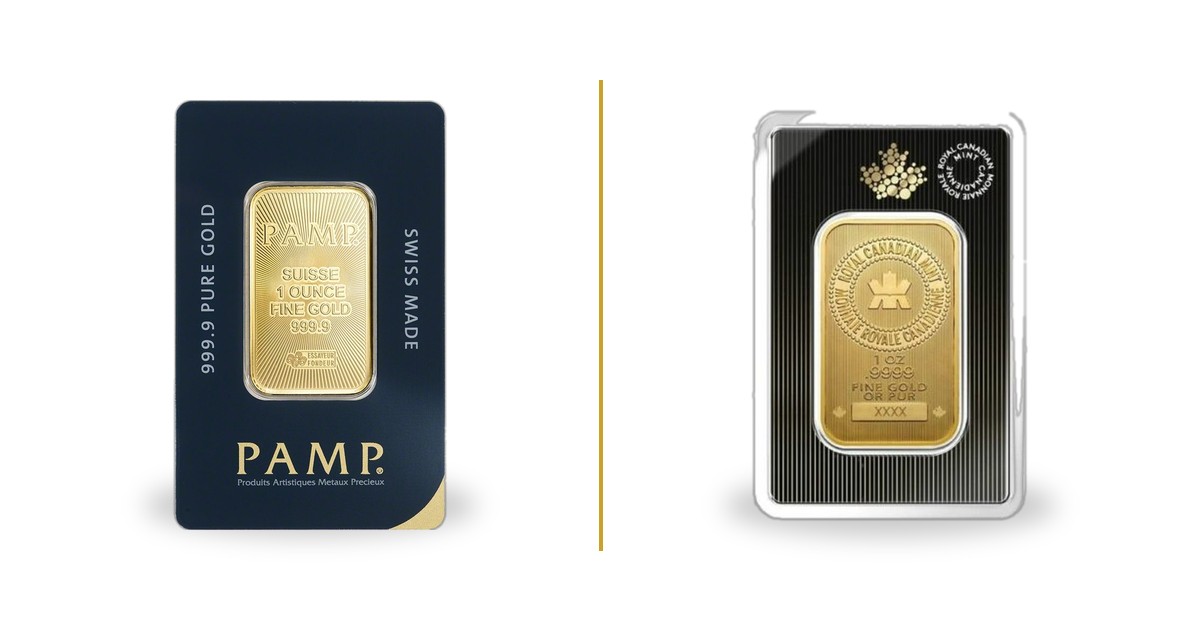
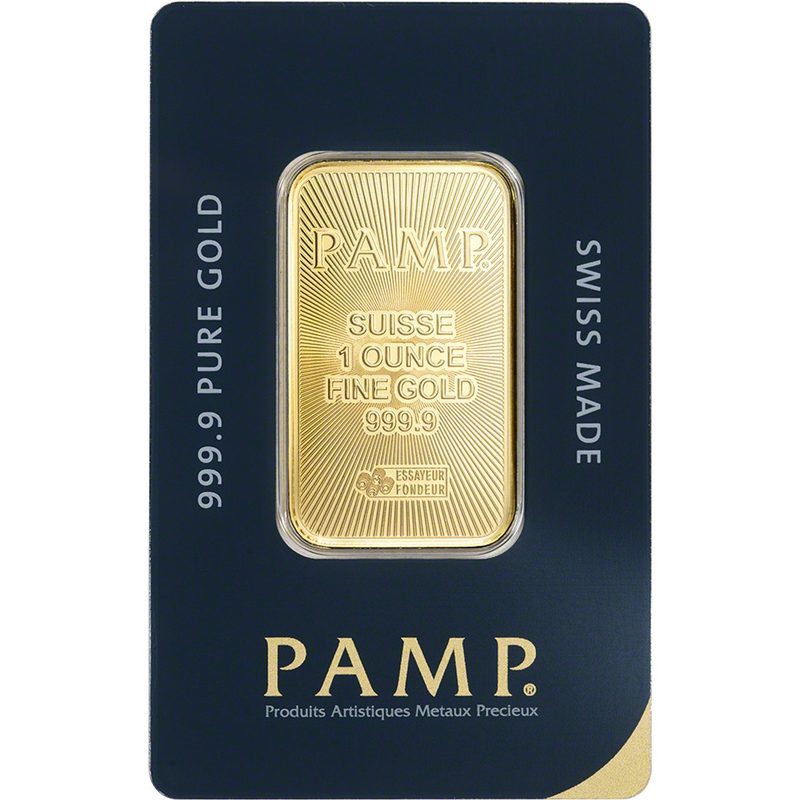
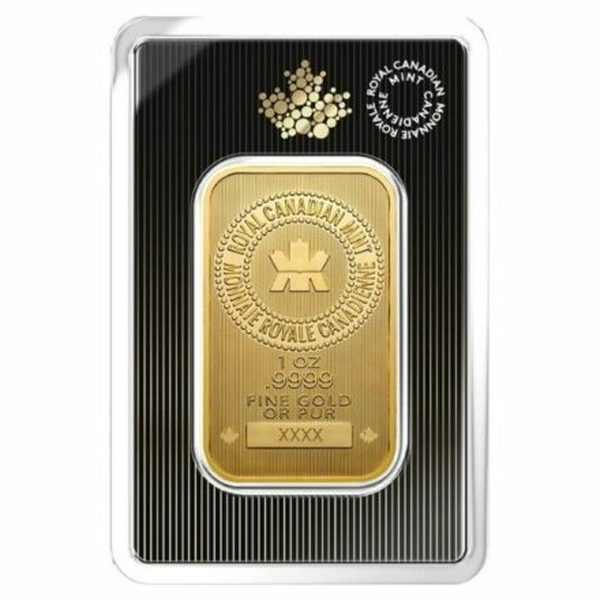
Worked example (illustrative numbers, not a live quote — check today’s spot before you buy): say the spot price is $4,000 per ounce and a dealer lists a 1 oz PAMP Suisse gold bar at $4,080. The metal value is $4,000, the premium is $80, and the premium is 2% — right in the typical range for a 1 oz bar from a recognized refiner. If the same dealer lists a 1 oz Royal Canadian Mint gold bar at $4,100, its premium is 2.5% — the PAMP bar is the better buy that day, even though both contain exactly the same ounce of gold.
How to Check the Live Spot Price
Before you buy anything, check the live spot price from a source you trust:
- LBMA Gold Price — the official benchmark, published twice daily (the AM and PM fix).
- Live price charts — Kitco, GoldPrice.org, and similar sites stream the spot price in real time during market hours.
- Your dealer’s product pages — a transparent dealer prices products as spot plus premium and updates as spot moves. If a dealer’s prices look frozen while spot is moving, ask why.
One warning: if a seller quotes you a price far below spot, walk away. Nobody sells real gold below its wholesale metal value — a price far under spot is the oldest red flag in bullion. For a fuller explanation of how spot works day to day, this complete guide to the gold spot price covers the OTC market, the LBMA auction, and trading hours in detail.
How to Buy Gold at the Best Price
Put it all together and the rules are simple:
- Check spot first. If you do not know spot, you cannot tell a fair price from a bad one.
- Compare total prices, not premiums. Two dealers can advertise the same premium and still charge different totals — compare the out-the-door price of the exact product.
- Buy bigger units when you can. A 1 oz bar carries a far lower premium than ten 1/10 oz coins with the same gold content. Fractional pieces are for gifting and flexibility, not for stacking cheaply.
- Compare the buy-back too. A low premium means little if the dealer buys back far below spot. Ask for the buy-back price before you buy.
- Buy from a dealer with transparent pricing, insured shipping, and a clear buy-back policy. Avoid sellers with no phone number, prices far below everyone else, or pressure to wire money to a personal account.
Frequently Asked Questions
What is the spot price of gold?
The spot price is the current wholesale market price for one troy ounce (31.1035 g) of pure gold for immediate delivery, quoted in US dollars and updated second by second while markets are open. It is a benchmark, not a retail price.
Can I buy gold at the spot price?
Practically no. Physical gold always costs spot plus a premium — minting, distribution, insurance, and dealer margin. The closest you can get is a large bar (1 kg or 10 oz), where premiums run about 1–2% over spot.
Why is gold more expensive than the spot price?
Because spot is the price of raw wholesale gold in 400 oz bars. A coin or small bar must be refined, struck, assayed, packaged, insured, shipped, and sold — each step adds cost, and that total is the premium.
Who sets the spot price?
Nobody sets it alone. It is discovered continuously through trading in the London OTC market, the twice-daily LBMA Gold Price auction (run by ICE Benchmark Administration), and COMEX futures in New York.
Does the spot price change on weekends?
Mostly no — trading pauses from Friday evening to Sunday evening Eastern Time, so the quoted spot price holds over the weekend and resumes moving when markets reopen.
Ready to Buy Gold at a Fair Price?
You now know what spot price means, how it is set, and how to work out what you should actually pay. The next step is simple: check today’s live prices and compare the total cost of the exact product you want. Browse gold bars and coins in our shop — recognized mints and refiners, transparent pricing tied to live spot, and insured delivery on every order.
This article is for education only and is not financial advice. Gold prices move with the live spot market — always check the current price before you buy.