Gold bars are the cheapest way to own physical gold — lower premiums per ounce than coins, no collectible markup, and the same metal in every bar. But the size you pick, the refiner you trust, and the dealer you buy from change what you pay and how easily you sell later.
This guide walks through the whole purchase: sizes and premiums, minted vs cast, purity and hallmarks, how to pick a dealer, the step-by-step buying process, and where to store your bars once they arrive.
The short answer: start with a 1 oz bar from an LBMA-accredited refiner (PAMP Suisse, Valcambi, Perth Mint), bought from an established dealer with transparent pricing and a written buyback policy. One troy ounce is the sweet spot — low enough premium to be efficient, small enough to sell easily, and recognized by every dealer in the world.
In This Guide
- Why Gold Bars Cost Less Than Gold Coins
- Gold Bar Sizes and Premiums
- Minted vs Cast Bars
- Purity, Hallmarks, and the LBMA
- How to Buy Gold Bars: 7 Steps
- Choosing a Dealer (and the Red Flags)
- Premium Math: A Worked Example
- Storing Your Gold Bars
- Gold Bars, IRAs, and Tax
- Which Gold Bars We Sell
- Frequently Asked Questions
Why Gold Bars Cost Less Than Gold Coins
A gold bar and a gold coin with the same weight contain the same gold — but the bar usually costs less. Coins carry government minting costs, security features, legal-tender status, and collector demand, all of which add premium. Bars are simpler to make: refined gold, poured or stamped, hallmarked, and sealed.
Published dealer guides put typical premiums at roughly 2–5% over spot for 1 oz+ gold bars, against roughly 4–8% for standard gold coins and 8–15% for fractional gold. The gap is the whole argument for bars: you pay for metal, not for minting art. (Premium structure in this how-to-buy-gold-bars guide)
Gold Bar Sizes and Premiums
Bars are sold in grams and troy ounces. One troy ounce equals about 31.1035 grams. Common retail sizes run from 1 gram to 1 kilogram; London Good Delivery bars — the wholesale standard — are around 400 troy ounces and are not a retail product.
| Size | Typical premium over spot | Best for |
|---|---|---|
| 1 gram | 15–30% | Gifts, very small budgets |
| 10 grams | 5–10% | Entry-level investment |
| 1 oz (31.1 g) | 3–5% | Most popular size — the sweet spot |
| 100 grams | 2–3% | Serious investors |
| 1 kilogram (32.15 oz) | 1–2% | Lowest premium per gram |
| 50–100 g bars | 3–6% | Regular accumulation |
The pattern is simple: the bigger the bar, the lower the premium per ounce — but the harder it is to sell part of your holding. A 1 oz bar is the best first buy for most people: low premium, easy to resell, and small enough that selling one bar does not mean liquidating your whole position. Gram bars are the most expensive gold per ounce you can buy; they make sense as gifts, not as investments.
Minted vs Cast Bars
Gold bars come in two formats:
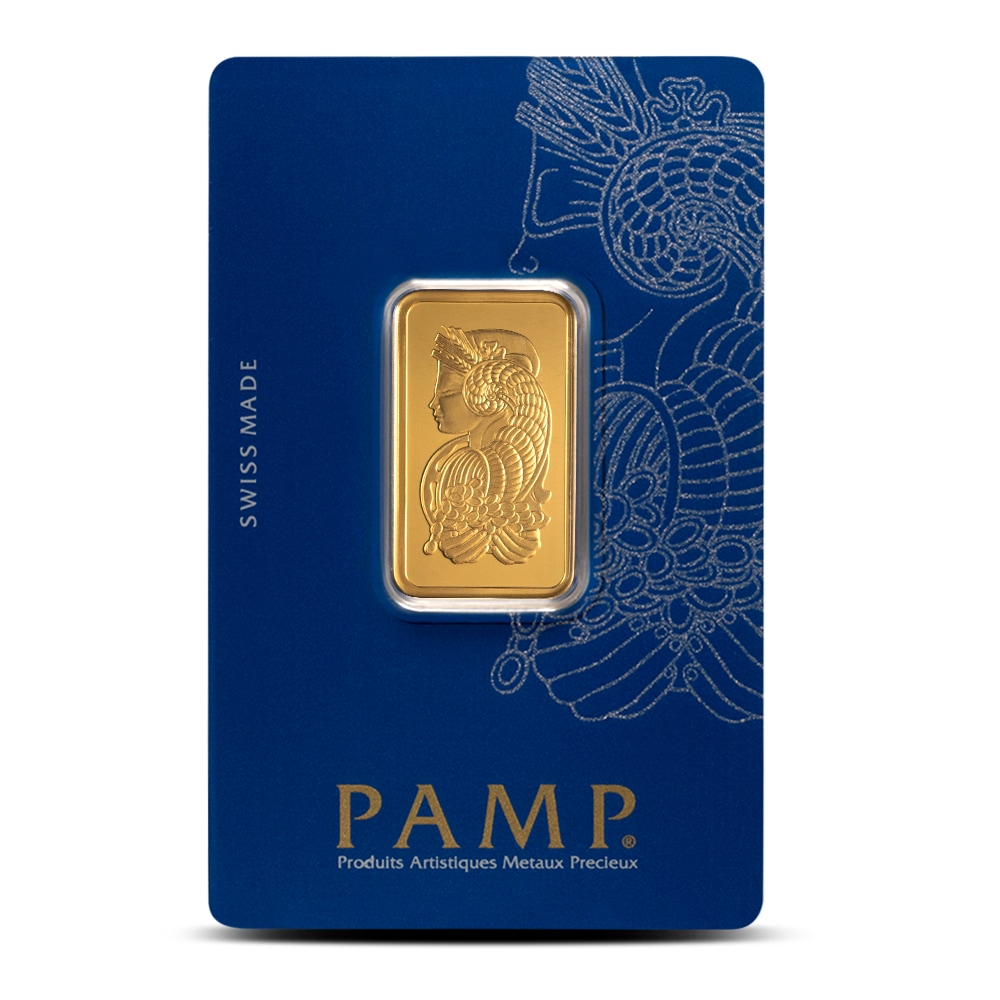
- Minted bars are cut or stamped from rolled gold sheet, with sharp edges and a uniform finish. They usually come sealed in tamper-evident assay packaging (CertiPAMP and similar), which certifies the weight and purity. Minted bars dominate smaller sizes — 1 g to 100 g.
- Cast bars are poured into molds, with a rougher, more rustic surface. They often carry slightly lower fabrication premiums at larger sizes, and are common at 100 g and above.
Neither format is better gold — the metal is identical. Minted bars are easier to verify on sight and resell in their sealed packaging; cast bars are cheaper per ounce at larger weights. For a first purchase, a sealed minted bar is the simplest choice: the assay card does the authenticating for you.
Purity, Hallmarks, and the LBMA
Investment-grade gold bars are .9999 fine (99.99% pure, 24 karat) from the major refiners. The London Bullion Market Association — which sets the global benchmark for wholesale gold trading — requires a minimum fineness of .995 for its Good Delivery bars. Most retail bars you will encounter exceed that threshold at .9999.
Every reputable gold bar carries a hallmark stamped or engraved directly into the metal: the refiner’s logo, the exact weight, and the purity. Sealed bars also carry a serial number on the assay card, which should match the number on the bar itself.
The most reliable safeguard is the refiner’s name. Bars from refiners on the LBMA Good Delivery List — PAMP Suisse, Valcambi, Perth Mint, Heraeus, Credit Suisse — carry the most liquidity worldwide, because every dealer on earth recognizes them. If you buy a bar from a refiner nobody has heard of, you will pay for it on resale.
How to Buy Gold Bars: 7 Steps
Step 1: Decide how much gold you want
Work out your budget first — and how much of it should be gold, not which bar looks best. A 1 oz bar is the standard first purchase; gram bars are for gifts.
Step 2: Pick a size you can resell
Choose by resale, not by ego. A 1 oz bar sells to any dealer, any day. A kilo bar needs a buyer with serious cash ready. If you might need to sell part of your holding, buy several smaller bars instead of one large one.
Step 3: Compare the total landed cost
Premium is only part of the price. Compare the out-the-door cost — bar price plus tax, payment fee, shipping, and insurance — across two or three reputable dealers. A low advertised premium is not enough if the shipping and fees eat the difference.
Step 4: Verify the dealer
Check the dealer’s reputation before you pay: clear contact information and a physical address, membership in trade organizations, reviews on independent sites, and a written buyback policy. The U.S. Mint does not sell bullion directly to the public — it sells through authorized purchasers, so buying from a dealer they supply reduces your counterfeit risk.
Step 5: Check the bar before you pay
Confirm the refiner is LBMA-accredited, the fineness is .9999 (or at least .995), the weight matches what you ordered, and the bar comes sealed in its assay packaging with a matching serial number.
Step 6: Pay securely and get insured delivery
Use a traceable payment method. Your order should ship insured, with tracking, and require a signature. Keep the receipt, the assay card, and the packaging — the next buyer will want to see them.
Step 7: Verify on arrival, then store it
Check the bar matches what you ordered — correct refiner, weight, purity, and serial number — and do not open the sealed assay packaging unless you have to. An unopened assay card is worth more on resale than an opened one.
Choosing a Dealer (and the Red Flags)
The dealer is the single biggest factor in whether you end up with authentic gold at a fair price. A good dealer has transparent pricing tied to live spot, insured shipping, a clear buyback policy, and a real phone number and address. (Dealer checklist in this buyer’s guide)
Walk away from any seller who shows these red flags:
- Prices far below every other dealer — real gold cannot be sold below market.
- No phone number, no physical address, no reviews anywhere.
- Pressure to wire money to a personal account, or to decide today.
- Unverified online marketplaces, social media sellers, and door-to-door offers.
- “Rare” or “collectible” bars sold as investments at huge markups — collectible value is a separate market, and you pay for it twice: once on purchase, once on resale.
Premium Math: A Worked Example
Premiums are abstract until you run the numbers. Here is a clearly labeled illustrative example — not today’s prices — using an illustrative spot price of $5,000 per ounce:
| Purchase | Illustrative premium | Total cost |
|---|---|---|
| One 1 oz bar at 4% over spot | 4% | $5,200 |
| The same ounce as 1 g bars at 20% over spot | 20% | about $6,000 |
Same ounce of gold, about $800 difference — because 31.1 gram bars each carry their own fabrication cost and premium. That is why size is the first decision, not an afterthought. The cheapest gold per ounce is the largest bar you can comfortably resell.
Storing Your Gold Bars
Gold is compact — a 1 oz bar is smaller than a matchbox — but it still needs proper storage:
- Home safe: fire-rated, bolted down, hidden. Works for a modest holding. Tell almost nobody you own it.
- Bank safe deposit box: convenient and cheap, but the contents are not FDIC-insured.
- Private vault: allocated and insured storage. The right choice as the holding grows.
Whichever you choose, keep the assay packaging sealed, keep the receipts, and insure the holding if the value justifies it.
Gold Bars, IRAs, and Tax
Gold bars can go into a precious metals IRA if they are at least .995 fine and from an approved refiner — which covers essentially every major-brand bar. If you are buying for retirement, confirm eligibility with your custodian first and have the dealer ship directly to your depository. (Our full guide: Gold IRA: How to Buy Physical Gold for Your Retirement Account)
On tax: physical gold is taxed as a collectible in the U.S., with a maximum 28% long-term capital gains rate — higher than the 20% that applies to stocks. The details matter when you sell, so see what tax you pay when you sell gold and silver on Bullion Bridge before you plan an exit.
Which Gold Bars We Sell
Two good starting points from our own shop:
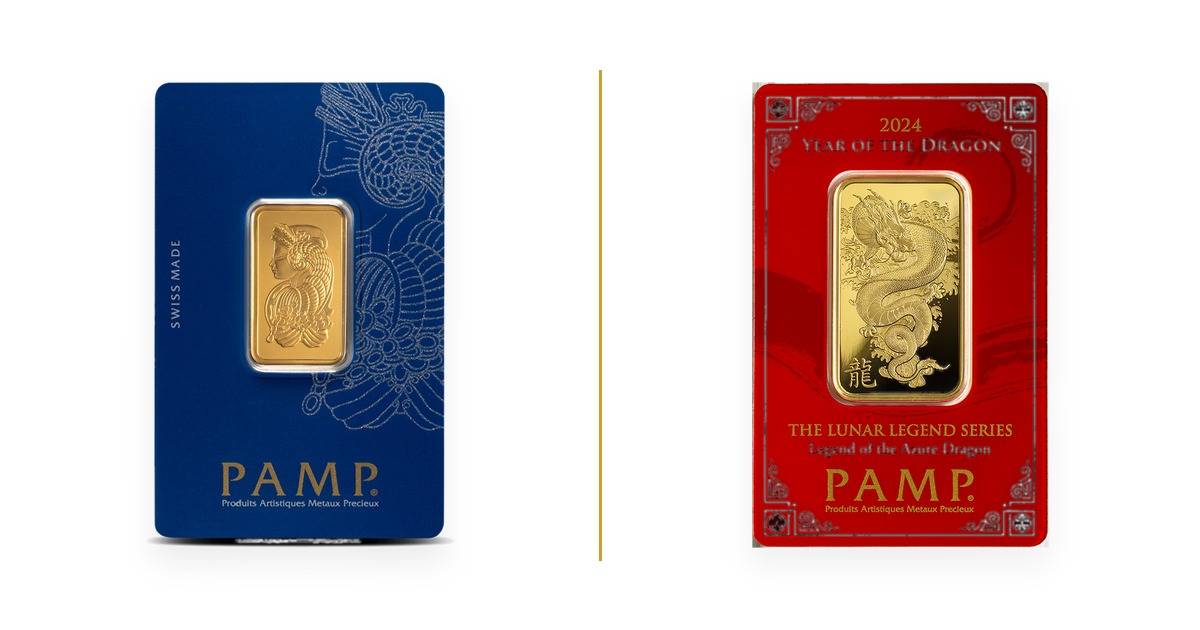
- 1/2 oz PAMP Suisse Fortuna Veriscan Gold Bar — .9999 fine, sealed in assay packaging with a matching serial number, and Veriscan digital authentication that verifies the bar from its microscopic surface fingerprint. Half an ounce is a strong first bar: affordable, flexible, and instantly recognized worldwide.
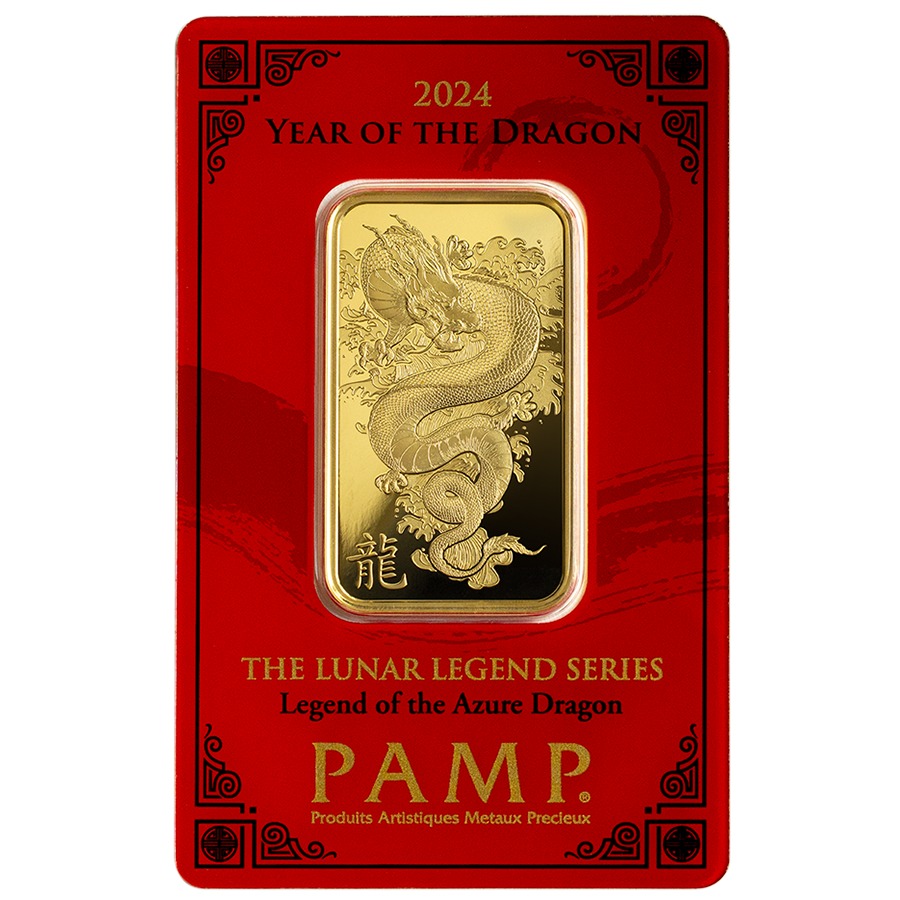
- 1 oz PAMP Suisse Lunar Dragon 2024 Gold Bar — 999.9 fine, 1 oz in red CertiPAMP packaging with a unique serial number. One honest note: themed bars like the Lunar Dragon can carry a small collectible premium over a plain PAMP bar, so compare the total price against a standard 1 oz bar before you buy.
We also stock 20 g Perth Mint bars, 100 g Engelhard and PAMP bars, and 250 g Valcambi bars for larger purchases — all from LBMA-accredited refiners. And if you are weighing bars against coins, see how gold bars vs gold coins compare on Bullion Bridge.
Frequently Asked Questions
What size gold bar should I buy first?
A 1 oz bar. It has the lowest practical premium for a first purchase (typically 3–5% over spot), sells to any dealer, and does not force you to liquidate a large position to raise a small amount of cash.
Are gold bars better than gold coins?
Bars are better for cost — lower premiums per ounce. Coins are better for liquidity and recognition, and some (like the Gold Eagle) carry legal-tender status. Most serious buyers hold both: bars for bulk, coins for flexibility.
How do I know a gold bar is real?
Buy from an established dealer, stick to LBMA-accredited refiners, and keep the bar sealed in its assay packaging — the card certifies weight and purity and carries a serial number matching the bar. PAMP’s Veriscan system can verify a Fortuna bar from its surface fingerprint. If a deal looks too good to be true, it is.
Can I buy gold bars with an IRA?
Yes, if the bars are at least .995 fine and from an approved refiner. Confirm with your custodian first and have the dealer ship directly to your depository — never to your home address.
Ready to Buy Your First Gold Bar?
Start with the size you can resell, the refiner every dealer recognizes, and a dealer who will buy it back. Browse gold bars in our shop — LBMA-accredited refiners, transparent pricing tied to live spot, and insured delivery on every order.
This article is for education only and is not financial advice. Gold prices move with the live spot market — always check the current price before you buy.