You can hold physical gold inside a retirement account — real coins and bars, in a vault, under the same tax rules as any other IRA. It is called a gold IRA, and it is one of the most-searched precious metals topics of 2026. But it is also one of the easiest to get wrong: buy the wrong coin, store it the wrong way, or fund it the wrong way, and the IRS treats your gold as a taxable distribution.
This guide explains how a gold IRA actually works — the IRS rules, which coins and bars qualify, the steps to open one, and what it costs — so you can decide whether it fits your retirement plan.
The short answer: a gold IRA is a self-directed IRA that holds IRS-approved physical gold (and silver, platinum, or palladium) in an approved depository, managed by a qualified custodian. You cannot keep the gold at home, and not every coin or bar qualifies — gold must be at least 99.5% pure, with the American Gold Eagle as the one famous exception.
In This Guide
- What Is a Gold IRA?
- Which Metals Can Go in a Gold IRA?
- How a Gold IRA Works: 4 Steps
- Funding It: Contributions, Transfers, and Rollovers
- What Gold Qualifies — and What Does Not
- What Does a Gold IRA Cost?
- Tax Treatment: Traditional vs Roth
- Gold IRA Pros and Cons
- Which Bullion Estate Products Qualify
- Frequently Asked Questions
What Is a Gold IRA?
A gold IRA is a self-directed individual retirement account (IRA) that holds physical precious metals instead of stocks, bonds, or funds. “Self-directed” means you direct the investments — but the account still needs three parties working together:
- You make the investment decisions and direct the account.
- A custodian — a bank, a federally insured credit union, or an IRS-approved nonbank trustee — administers the account, handles the paperwork, and reports to the IRS. It must meet the requirements of IRC Section 408(a)(2).
- An approved depository stores your metals in a secure vault. Commonly used facilities include the Delaware Depository and Brinks.
The key rule: the gold must remain in the physical possession of a qualified trustee. The moment it leaves that custody arrangement — including into your own home safe — the IRS treats it as a distribution, and the tax benefit is gone.
A gold IRA follows the same tax rules as any IRA. The only difference is what it holds: tangible metal instead of paper assets. It can be structured as a traditional IRA (pre-tax dollars, tax due on withdrawal) or a Roth IRA (after-tax dollars, tax-free withdrawals in retirement).
Which Metals Can Go in a Gold IRA?
The IRS allows four precious metals in a gold IRA — gold, silver, platinum, and palladium — but each must meet a strict minimum purity, and it must come from an approved mint or refiner.
| Metal | Minimum purity | Example qualifying products |
|---|---|---|
| Gold | .995 fine (99.5%) | Gold bars .995+, most government gold coins |
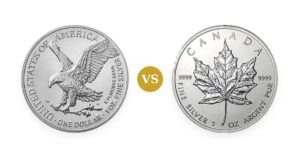
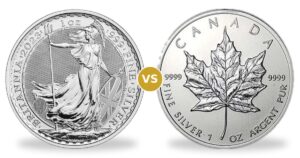
| Silver | .999 fine (99.9%) | American Silver Eagle, Canadian Silver Maple Leaf, .999 silver bars |
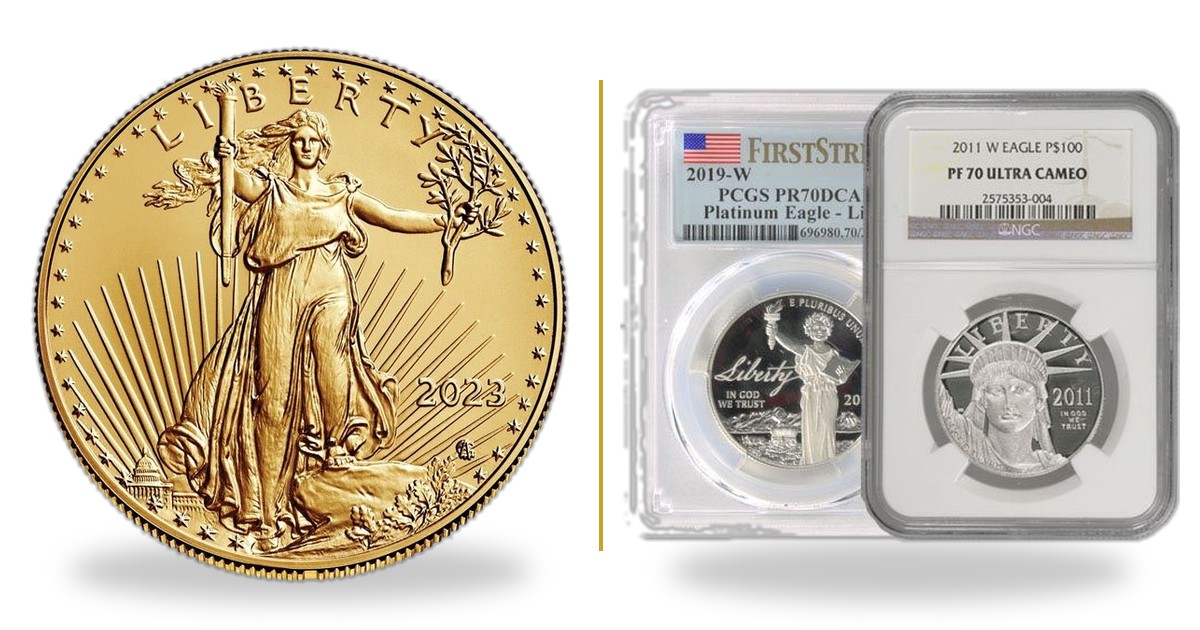
| Platinum | .9995 fine (99.95%) | American Platinum Eagle, .9995 platinum bars |
| Palladium | .9995 fine (99.95%) | American Palladium Eagle, .9995 palladium bars |
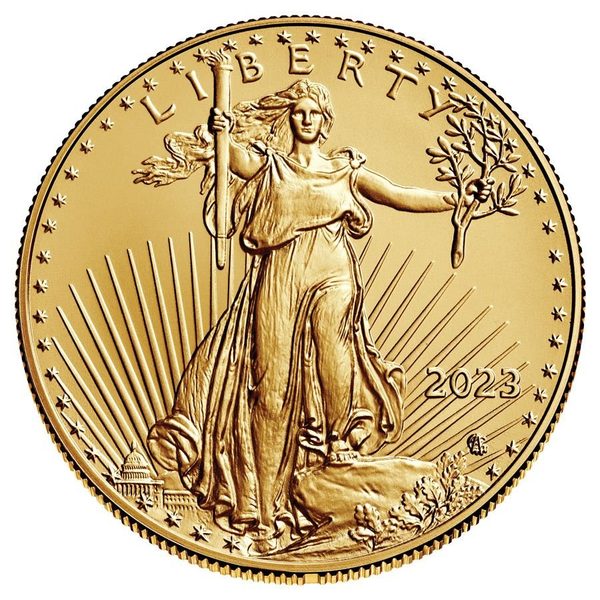
The one famous exception is the American Gold Eagle: it is only 91.67% pure (22 karat), which would normally disqualify it — but Congress explicitly approved it, along with the American Silver Eagle and American Platinum Eagle, in the statute that defines legal-tender bullion coins (31 USC 5112). That makes the Gold Eagle the easiest qualifying gold coin to buy: no purity math needed, because the law names it.
How a Gold IRA Works: 4 Steps
Step 1: Open a Self-Directed IRA
You open a self-directed IRA with a custodian experienced in physical precious metals — not a regular brokerage, which typically cannot hold physical bullion. The custodian establishes the account and handles the compliance side.
Step 2: Fund the Account
You fund it with a contribution, a transfer, or a rollover (see the next section — the method matters, because the wrong one can trigger taxes).
Step 3: Buy IRS-Approved Bullion
You choose qualifying coins or bars from an accredited dealer, and instruct the custodian to complete the purchase. The custodian authorizes it, the dealer ships the metals by insured carrier directly to the depository, and you never take personal possession. From application to metals-in-vault typically takes 7 to 14 business days.
Step 4: Store It in an Approved Depository
Your metals arrive at the depository, are verified by weight and type, and go into vault storage. They stay there until you take a distribution in retirement.
Funding It: Contributions, Transfers, and Rollovers
There are three ways to put money into a gold IRA, and they are not interchangeable.
| Method | How it works | Watch out for |
|---|---|---|
| New contribution | Cash into the IRA, within annual limits | 2026 limit: $7,500 under age 50, $8,600 at 50+ (IRS Notice 2025-67); combined across all your traditional and Roth IRAs |
| Direct transfer | Custodian to custodian — money never touches your hands | The cleanest option: no withholding, no 60-day deadline, no limit on how often |
| Rollover | You take a distribution and redeposit it yourself | Exactly 60 days to complete it — miss the window and the whole amount becomes taxable income, plus a 10% penalty if you are under 59½ |
The 2026 contribution limits come from IRS Notice 2025-67: $7,500 for savers under 50, $8,600 for those 50 and older (a $1,100 catch-up, up from $1,000 in 2025). The limit is combined across all your traditional and Roth IRAs — you cannot put $7,500 in each. Rollovers do not count against the limit.
What Gold Qualifies — and What Does Not
The purity rule is the one that catches people out:
- Qualifies: gold bars and rounds at .995 fine or better; American Gold Eagles (explicitly approved by Congress despite 91.67% purity); American Buffalo coins; Canadian Gold Maple Leafs (.9999); other government-minted coins meeting the threshold.
- Does not qualify: gold jewelry, numismatic or collectible coins bought for their rarity value, gold below .995 fineness, and any metal not from an approved mint or refiner. The IRS treats most metals and gems as collectibles — buying a collectible with IRA funds triggers an immediate taxable distribution equal to the purchase price.
- Never qualifies for home storage: no gold in an IRA may be kept at home, in a home safe, or in a bank safe deposit box in your name. It must sit with a qualified trustee. If you buy unapproved coins, they cannot go in the IRA at all — and you could face penalties.
Always confirm eligibility with your custodian before purchasing. The custodian is the one who has to defend the account to the IRS.
What Does a Gold IRA Cost?
A gold IRA costs more than a regular IRA, because there are more parties involved. Expect:
- A one-time setup fee, often $50–$300, to open the self-directed account.
- Annual custodian fees for administration and IRS reporting.
- Annual storage fees at the depository, which vary with the value stored.
- The premium over spot on the metals themselves — the same premium you pay on any bullion purchase.
Before you open an account, compare at least two or three custodians and dealers on fees, storage arrangements, product premiums, and resale policies. The cheapest setup fee is not the cheapest account if the annual storage fee is high.
Tax Treatment: Traditional vs Roth
The tax treatment depends on the account type, not on the fact that it holds gold:
- Traditional gold IRA: contributions may be tax-deductible; distributions in retirement are taxed as ordinary income. Required minimum distributions (RMDs) begin at age 73.
- Roth gold IRA: contributions are after-tax; qualified withdrawals in retirement are tax-free. Income limits apply to Roth contributions.
- Early distributions: taking metal or cash out before age 59½ generally triggers income tax plus a 10% additional tax, unless an exception applies.
Because the tax rules around distributions are the same ones that apply when you sell metals outside an IRA, it is worth understanding both sides — see our companion guide on what tax you pay when you sell gold and silver on Bullion Bridge.
Gold IRA Pros and Cons
| Pros | Cons |
|---|---|
| Physical gold inside a tax-advantaged account | More fees than a regular IRA (setup, custodian, storage) |
| Diversification beyond stocks and bonds | No dividends or interest — gold pays nothing while it sits |
| A hedge against inflation and currency risk | You cannot hold the metal yourself |
| Same tax treatment as any IRA | Fewer product choices — only IRS-approved metals qualify |
| Gold is a tangible asset you can verify | Selling requires going through the custodian and depository |
Which Bullion Estate Products Qualify
The coins below are IRA-eligible under the rules above, and all are in our shop:
- 1 oz Gold American Eagle (old-style dates) — the classic qualifying gold coin, explicitly approved by Congress.
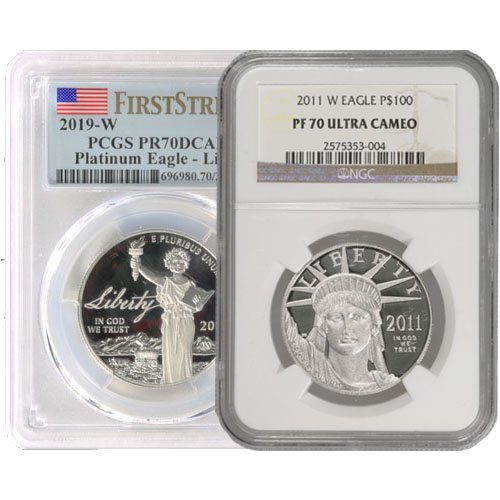
- 1 oz American Platinum Eagle — .9995 fine platinum, the highest face value ($100) ever placed on a U.S. coin.
- 2021 1 oz American Palladium Eagle — .9995 fine palladium, Weinman’s Winged Liberty design.
- 2022 1 oz American Silver Eagle (BU) — .999 fine silver, the most liquid silver coin in the U.S.
When you buy for an IRA, tell your custodian first and have the dealer ship directly to your depository — never to your home address.
Frequently Asked Questions
Can I store gold from my IRA at home?
No. IRS rules require IRA gold to stay in the physical possession of a qualified trustee at an approved depository. Taking personal possession is treated as a distribution — taxable income, plus a 10% penalty if you are under 59½. (More on the rules in this step-by-step gold IRA guide.)
What happens if I buy gold that does not qualify?
It cannot go in the IRA. If IRA funds were used to buy it, the IRS treats the purchase as a taxable distribution equal to the purchase price. Confirm eligibility with your custodian before you buy — not after.
Can I roll over a 401(k) into a gold IRA?
Yes. A direct rollover from a 401(k), 403(b), TSP, or another IRA into a self-directed IRA is the most common way people fund a gold IRA, and a direct transfer avoids withholding and the 60-day deadline entirely.
Is a gold IRA right for me?
It fits savers who want physical metal inside a tax-advantaged account and accept the extra fees and the no-home-storage rule. It does not fit anyone who wants to hold their gold, earn income from it, or trade it quickly. (A plain-language overview of the pros, cons, and rules.)
Ready to Add Gold to Your Retirement?
A gold IRA is not complicated — open a self-directed account, fund it, buy qualifying metal, and let the depository hold it. The complications come from skipping steps: the wrong coin, the wrong storage, the wrong funding method. Get those three right and the rest is paperwork. Browse IRA-eligible coins in our shop — recognized mints, transparent pricing tied to live spot, and insured delivery on every order.
This article is for education only and is not tax or financial advice. IRA rules change, and your situation is your own — confirm eligibility, limits, and tax treatment with your custodian or a tax professional before you buy.